

Global Indigenous Youth Summit on Climate Change

EDUCATION & TRAINING


What is being proposed?
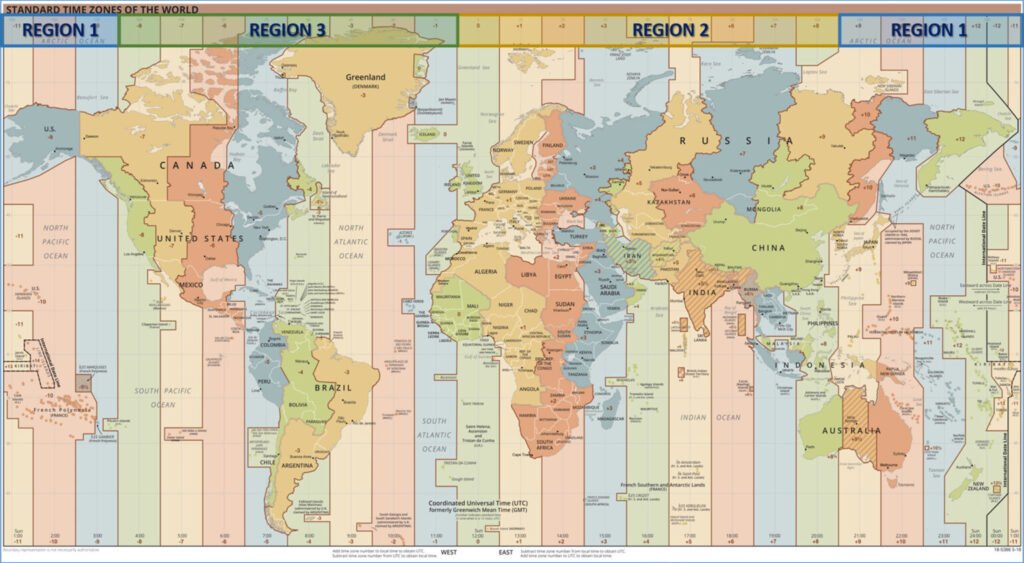
The Global Indigenous Youth Summit on Climate Change (GIYSCC) is a “virtual dialogue by, for and among Indigenous youth with global inclusion” on August 9th – circling the Earth with the Sun across three 8-hour time zones in 24 hours (00:00-24:00 GMT) on the International Day of the World’s Indigenous Peoples. GIYSCC was initiated in 2022 by Professor Berkman as the coordinator in collaboration with the International Network for Government Science Advice (INGSA) – Africa as part of their Science Advice Skills Development Program (SASDP) mentee-mentor initiative. GIYSCC-2023 was hosted by the United Nations Institute for Training and Research (UNITAR) with 1300+ registrants from 112+ nations across 88+ languages and partners globally, including Springer-Nature (which donated $15,000) and the International Institute of Science Diplomacy and Sustainability (IISDS) at UCSI University in Malaysia (founded by Professor Zakri). An outcome of GIYSCC-2023 was the invited Nature Communication written by GIYSCC Indigenous Youth Leaders that Indigenous Youth Must Be at the Forefront of Climate Diplomacy, introducing the legacy concept of a Global Partnership of Indigenous Youth (in the spirit of SDG 17). GIYSCC-2024 was hosted by FutureEarth with 800+ registrants from 100+ nations across 230+ languages. GIYSCC-2025 also will be hosted by FutureEarth, which has created additional venues for dialogues among GIYSCC Indigenous Youth Leaders in conjunction with the Sustainability Research and Innovation (SRI) Congress virtually in Panama (2023) as well as in-person in Finland (2024) and United States (2025). This GIYSCC Initiative also involves production of the third volume in the Informed Decisionmaking for Sustainability book series published by Springer, with GIYSCC Indigenous Youth Leaders as the co-editors of Climate Action with Global Inclusion: Perspectives, Lessons and Observations from Indigenous Youths on Climate Adaptation and Resilience, involving more than eighty submitted abstracts from Indigenous youth from Africa, Asia, Australia, Europe, North America and South America, including the Middle East, Arctic and Oceania with Small Island Developing States (SIDS) as a particular focus.
Who is involved?
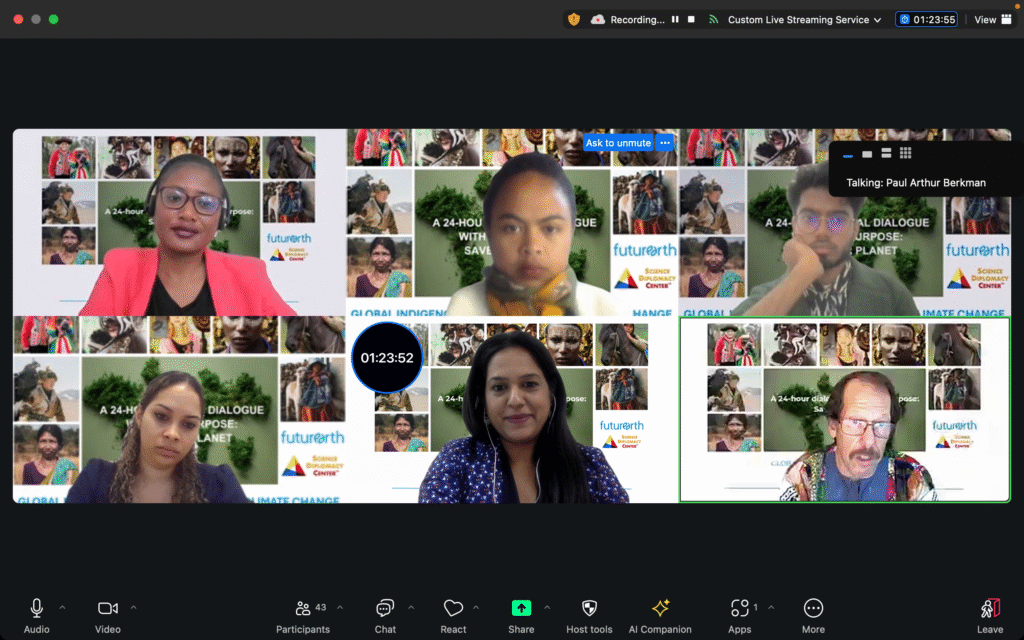
Professor Berkman will continue to coordinate the GIYSCC Initiative in close collaboration with INGSA-Africa and INGSA-Asia, involving more than 40 Indigenous Youth Leaders globally across Region 1 (Asia/Oceania), Region 2 (Africa/Europe/Middle East/Arctic) and Region 3 (South America, North America, Arctic). At the recent World Science Forum in Budapest, as regional chapters, INGSA-Africa and INGSA-Asia introduced a joint proposal to INGSA in view of SASDP and GIYSCC: “The proposal was very well received during the Board meeting, and members from other Chapters showed interest in both the SASDP and the GIYSCC. Therefore INGSA Asia and INGSA Africa will move forward with the collaboration.” INGSA-Asia was founded by Professor Zakri, commending the sustainability considerations with INGSA-Asia to establish a “permanent host institution” for GIYSCC at the International Institute of Science Diplomacy and Sustainability (IISDS) at UCSI University in Malaysia. Additionally, in view of SDCI-IISDS interconnections, Professor Berkman is a Visiting Distinguished Professor at IISDS through 2026. There are important contributions with this initiative that could from all SDCI Directors.
How will this initiative be executed?
Immediate funding is needed to support the GIYSCC Indigenous Youth Leaders and their dialogue initiatives ($50K), including Volume 3 editing, open access and management. GIYSCC fundraising would include submission with the International Science Council (ISC) Science Missions for Sustainability and Rockefeller 17 Rooms initiatives. There is growing interest in the GIYSCC Initiative from diverse funding sources, including the National Science Foundation (NSF) through a Small Grant for Exploratory Research (SGER) that would be entertained from SDCI by an NSF program manager involved with SRI-2025, who would provide discretionary support up to $100K for two years to develop a GIYSCC sustainability hub in the United States.
Why is this consistent with our mission? Where is impact driven?
The GIYSCC Initiative, in particular, is a science-diplomacy case study that tests as well as applies, trains and refines the theory, methods and skills with informed decisionmaking. This initiative involves diverse metrics to assess and enhance common-interest building applications around the world, as noted “with global inclusion”. SDCI is providing leadership to facilitate global dialogues among Indigenous youth (minimizing language and technology barriers) to help build and sustain a Global Partnership of Indigenous Youth.
GIYSCC Projects
Founding Partners
- United Nations Institute for Training and Research (UNITAR)
- Science Diplomacy Center™
- Springer Nature
- International Network for Science Advice (INGSA) Africa
- University of Lagos
- Nigerian Young Academy
- University of Port-Harcourt
- Université Félix Houphouët-Boigny
- Institut Sénégalais de Recherches Agricoles (ISRA)
- United Nations Youth Association Ghana (UNYA-GH)
- Students on Ice (SOI) Foundation
- Connecting Climate Minds
- International Institute of Science Diplomacy and Sustainability (IISDS)
- Kenya Wildlife Service
- University of the Arctic (UArctic)
- University of Massachusetts Boston (UMass Boston)
- University of British Columbia - Institute for the Oceans and Fisheries
- Solving Food-Climate-Biodiversity (FCB)
- International Astronomical Search Collaboration (IASC)
- Amanah Lestari Alam (ALAM)
- Bank Pembangunan (BPMB) Malaysia Development Bank
- Northlands College
- Inter-American Development Bank (IDB)
- United Nations Technology Bank for Least Developed Countries (UN Technology)
- Program on Negotiation - Harvard Law School
- Evidence Use in Environmental Policymaking in Nigeria (EUEPiN)
- Child Trends
- Futurearth
- Ecole Nationale Supérieure de Chimie (ENSC)
- Sciences and Development Association
- National University of Singapore (NUS)
- University of South Africa (UNISA)
- North-West University (NWU)
- University of Allahabad
- Mount Royal University
- Global Young Academy
- United Nations University Institute for the Advanced Study of Sustainability (UNU IAS)
- United Network for Climate Inclusivity Advocacy Livelihoods, Inherent Utilization and Mobilization (UNCIALIUM)
- Global Consortium for Sustainability Outcomes
- WITS Advanced Drug Delivery Platform (WADDP)
- Global Home for Indigenous Peoples
- Punjab Agricultural University
- All in Foundation
- Village Farmers Initiative
- Consortium Innovation Strategie Globale in the Congo (CISG)
- Massive Vision Enterprise
- Palawan State University
- Sauyaq Solutions
- Red Nation College
- Arctic Research Consortium of the United States (ARCUS)
- Ministère de l'Enseignement Supérieur et de la Recherche (MESUPRES)
- Institute of Food Technologists
- Science Diplomacy Center™
- Springer Nature
- International Network for Government Science Advice (INGSA) – Africa
- University of Lagos (UNILAG)
- Nigeria Young Academy
- International Institute of Science Diplomacy and Sustainability – Malaysia
- Kenya Wildlife Services
- University of the Arctic (UArctic)
- The University of Massachusetts Boston (Umass Boston)
- Institute for the Oceans and Fisheries, University of British Columbia (UBC)
- Solving FCB
- University of Port Harcourt
- Université Félix Houphouët-Boigny
- Institut Senegalais de Recherches Agricoles (ISRA)
- United Nations Youth Association – Ghana (UNYA-GH)
- Students on Ice Foundation
- Connecting Climate Minds
- International Institute of Science Diplomacy & Sustainability (IISDS)
- Amanah Lestari Alam (ALAM) of Malaysia
- Malaysia Development Bank
- Northlands College
- Inter-American Development Bank
- United Nations Technology Bank for Least Developed Countries
- Program on Negotiation at Harvard Law School
- EUEPiN at the University of Lagos
- Child Trends
- Future Earth
- Kenitra National Higher School of Chemistry, Ibn Tofail University (ENSCK-UIT)
- Sciences & Development Association (SDA)
- Science Diplomacy Center™
- Springer Nature
- International Network for Government Science Advice (INGSA) – Africa
- University of Lagos (UNILAG)
- Nigeria Young Academy
- International Institute of Science Diplomacy and Sustainability – Malaysia
- Kenya Wildlife Services
- University of the Arctic (UArctic)
- The University of Massachusetts Boston (Umass Boston)
- Institute for the Oceans and Fisheries, University of British Columbia (UBC)
- Solving FCB
- University of Port Harcourt
- Université Félix Houphouët-Boigny
- Institut Senegalais de Recherches Agricoles (ISRA)
- United Nations Youth Association – Ghana (UNYA-GH)
- Students on Ice Foundation
- Connecting Climate Minds
- International Institute of Science Diplomacy & Sustainability (IISDS)
- Amanah Lestari Alam (ALAM) of Malaysia
- Malaysia Development Bank
- Northlands College
- Inter-American Development Bank
- United Nations Technology Bank for Least Developed Countries
- Program on Negotiation at Harvard Law School
- EUEPiN at the University of Lagos
- Child Trends
- Future Earth
- Kenitra National Higher School of Chemistry, Ibn Tofail University (ENSCK-UIT)
- Sciences & Development Association (SDA)