
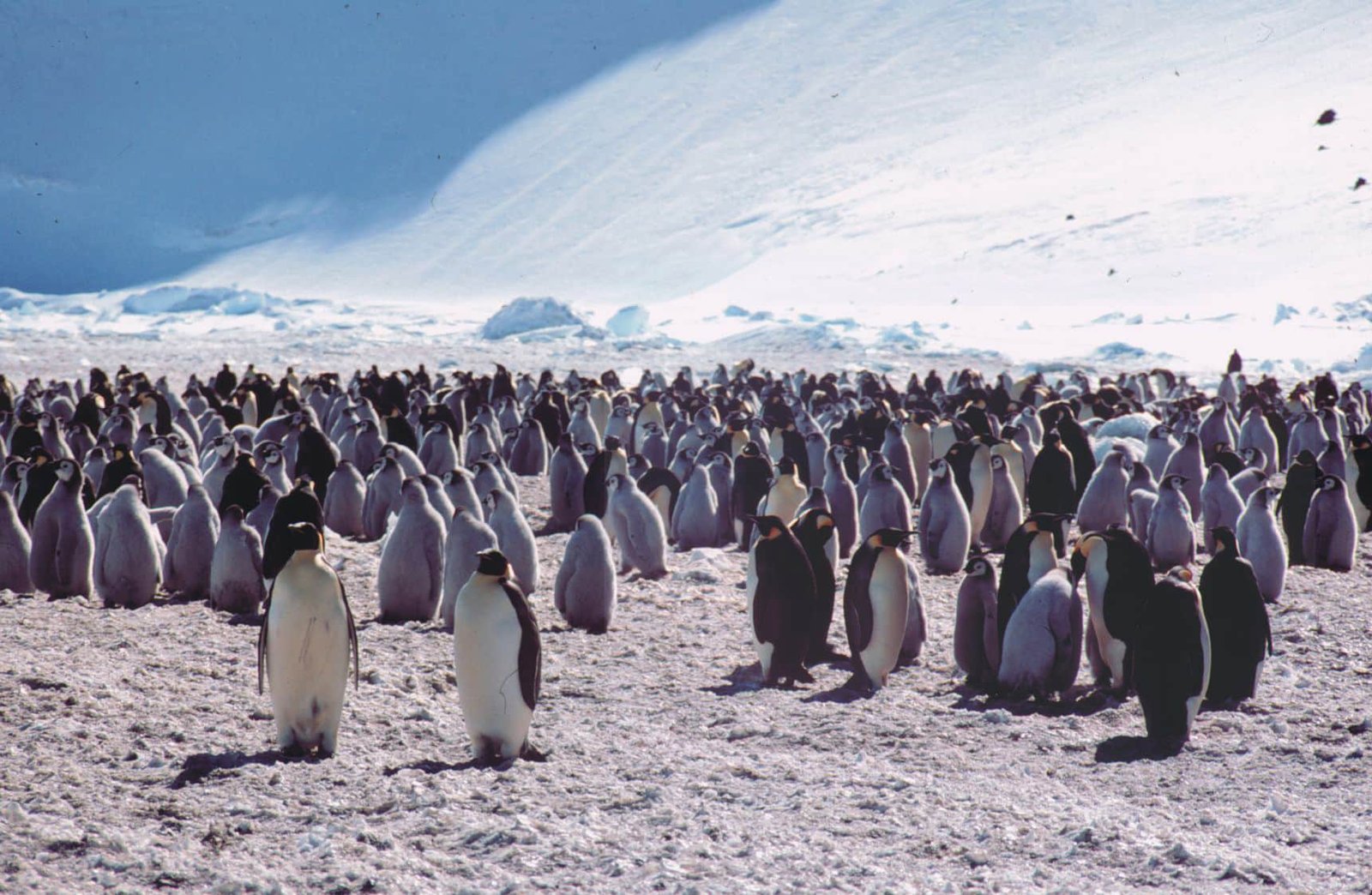
Antarctica Day
December 01
There is historic relevance of Antarctica Day – on December 1st as a day of “peace for all mankind” – originating on the fiftieeth anniversary of the 1959 Antarctic Treaty that was signed with the United States and Soviet Union among ten other nations at the height of the Cold War as the first nuclear arms agreement.
What enabled these superpower adversaries to cooperate in Antarctica and Outer Space throughout the Cold War, despite their conflicts elsewhere? This is a core question with science diplomacy that Prof. Paul Arthur Berkman began to ask himself in 1981, while on a winter-over SCUBA research expedition in McMurdo Sound, Antarctica, with Scripps Institution of Oceanography at the age of 22.
The following year, passion and a sense of global responsibility with perspectives from Antarctica enabled him to teach “Antarctic Marine Ecology and Ocean Policy” as a Visiting Professor at the University of California Los Angeles.
In a contemporary context, we are now engaged in new period of restrained conflict when dialogues are excluded among nations. With heightened relevance once again, Antarctica Day is an exemplar for humanity, revealing “forever” lessons of great powers balancing national interests and common interests for the benefit of all on Earth across generations.
International science clearly is part of the answer, considering the 1959 Antarctic Treaty emerged directly from the International Geophysical Year (IGY) in 1957-58. The IGY, which had been renamed from the 3rd International Polar Year (IPY), also was a key step in the longest continuous climate research program that humankind has created.
The IPY process started in 1882-83 to address “weather” during a solar maximum of sunspot activity, following the Little Ice Age that had diminished economies, health and productivity across Europe for centuries prior to 1850. Nations recognized nearly 150 years ago that the Sun is the primary external force behind the climate dynamics of Earth (as with all planets that have atmospheres in our solar system).
The 5th IPY is now being planned for 2032-33, far enough into the future to be away from the emotion of current geopolitics but close enough to stimulate informed decisionmaking with sustainability and hope, possibly producing transformational global synergies as happened with the IGY.